


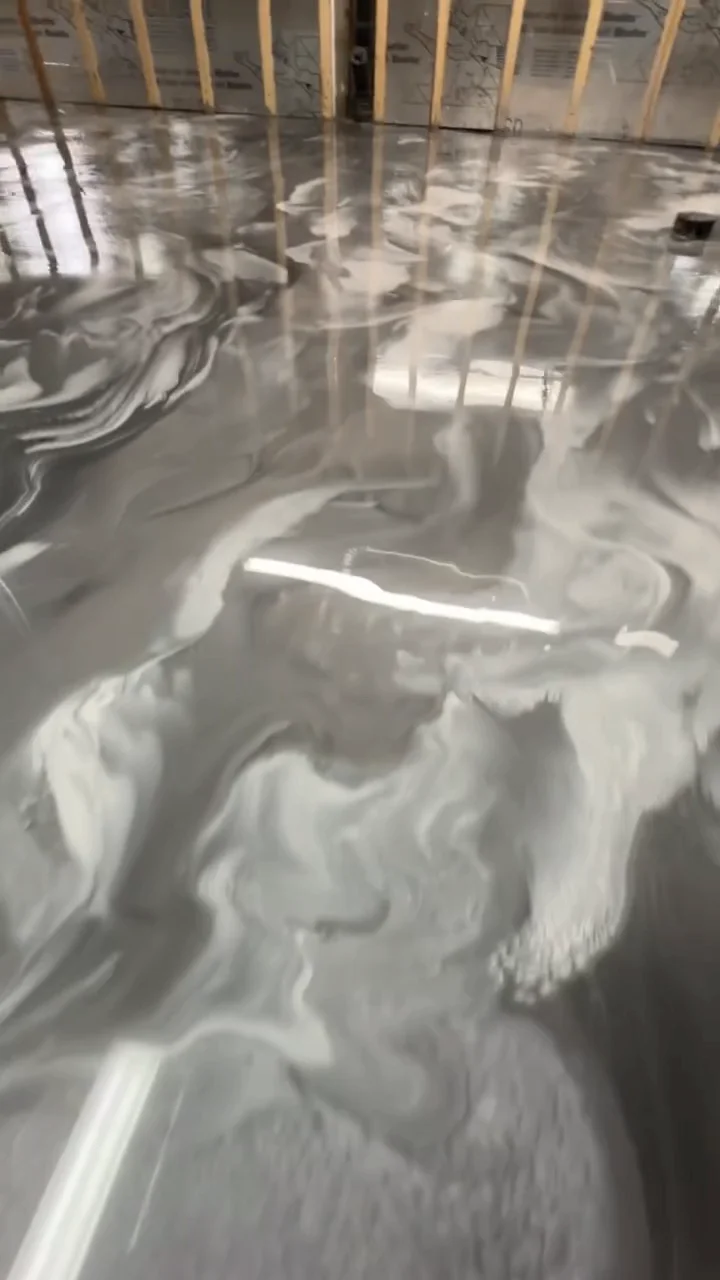
An epoxy floor in Quebec is priced by the square foot, and for a residential garage that price comes down to the condition of the concrete, the prep it demands, the number of coats, and the finish options you choose. For a basement or a commercial space, the same logic applies, adjusted for the square footage and the prep the surface requires. A number quoted without seeing the slab is just a guess.
What determines the price of an epoxy floor
Several factors shift the cost of a project, well before square footage even comes up:
- The condition of the existing concrete: cracks, residual moisture, or old layers of paint call for extra preparation, which raises the price.
- The number of coats: a basic two-coat system costs less than a multi-coat system with a decorative finish (flakes, quartz, metallic effect).
- The type of resin: standard epoxy, high-performance epoxy, or polyaspartic, each with a different cost and lifespan.
- Accessibility and square footage: a large commercial or industrial space often earns a better price per square foot than a small residential garage, thanks to the efficiency of the job site.
- Usage options: chemical resistance, anti-slip, or a high-end finish for a finished basement add to the base cost.
Price by square footage: garage, basement, commercial, industrial
Epoxy garage floor
For a standard residential epoxy garage floor (roughly 400 to 600 sq ft), the total price includes the concrete prep, the coats, and the final sealer. A double garage generally costs more overall than a single garage, but the price per square foot drops slightly thanks to economies of scale.
Basement epoxy floor
A basement epoxy floor often calls for extra attention to moisture and vapour management before application, which can affect the price. The finish is usually more decorative than in a garage, which adds another layer of cost.
Commercial and industrial
Commercial and industrial surfaces involve larger volumes, but also higher performance demands: resistance to wear, chemicals, or heavy traffic. The price per square foot is often negotiated based on the total volume and the project schedule, especially in post-disaster cases where timelines are tight.
Materials vs labour: where your money goes
In an epoxy floor project, the materials (resin, hardener, decorative aggregates, sealer) make up part of the budget, but the labour weighs just as much, if not more. Preparing the concrete (grinding, crack repair, dust removal) takes time and specialized equipment, and it is often this step that separates a durable result from a finish that flakes after a few months.
A price that is too low usually hides insufficient preparation. It is the most important step for the floor's longevity, well before the choice of colour or finish.
Epoxy vs polyaspartic: impact on cost
Polyaspartic often costs a bit more up front, but its fast cure time cuts the installation time and, with it, how soon the space can be occupied. For a business that cannot close for long, that advantage can offset the difference in material cost. For a residential project with no time pressure, traditional epoxy remains a solid, budget-friendly option.
How to get a fair price for your project
Every space is different: the condition of the concrete, the intended use, and the finish you want all change the math. The best way to know the real price of your project is to have your surface assessed on site rather than rely on a generic online estimate. You can request a free quote for an accurate price based on your space, whether it is a garage, a basement, or a commercial unit.
For post-disaster projects, where timelines and insurance come into play, it is also worth it to get a detailed quote quickly so you can plan the restoration with no budget surprises.
Related reading: