


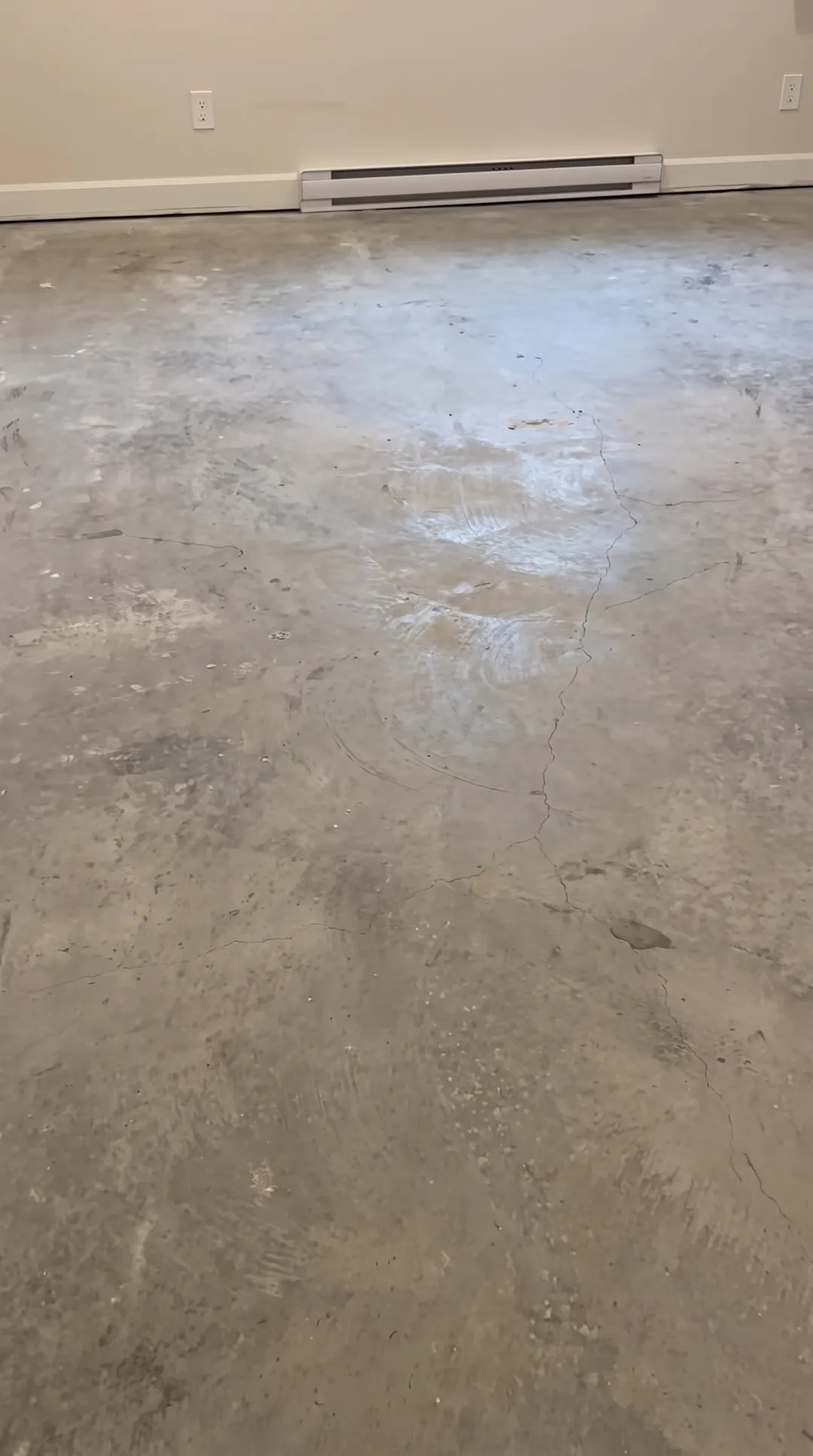
The price of an epoxy basement floor on the South Shore varies depending on the condition of the slab, the square footage, the moisture level, and the finish you choose (solid, flake, or metallic). A dry, sound slab generally costs less to treat than one that's damp or cracked, since the latter requires extra prep work. The only way to get an exact number is with an on-site evaluation.
What Makes Epoxy Basement Flooring Prices Vary
The final cost of a basement epoxy flooring project depends on several concrete factors, not a flat rate per square foot.
- Condition of the slab: a surface with cracks, chips, or areas that need levelling requires additional prep work before the coating goes down.
- Moisture level: a basement with slight residual dampness needs a different system than one with a perfectly dry slab.
- Total square footage: the more area to cover, the higher the overall cost, though the price per square foot tends to drop on larger jobs.
- Type of finish: a solid-colour system costs less than a decorative flake finish or a high-end metallic finish.
- Access and basement layout: narrow stairways, obstacles, or a tight work area can affect the labour time required.
To find out the real budget for your project, the best approach is still to request a quote after having your basement evaluated.
Epoxy or Polyaspartic: Which Option Suits Your Basement
The choice between an epoxy system and a polyaspartic system mostly comes down to your slab's condition and what kind of finish you're after.
A 100% solid epoxy system works well for a residential basement with a dry, stable slab. A polyaspartic system, often paired with decorative flakes, is usually the better choice when the slab shows slight moisture or when the homeowner wants a finish that cures faster. Each option has its advantages depending on your basement's conditions, and this choice has a direct impact on the final price.
Lifespan and Maintenance of an Epoxy Floor
How long an epoxy floor lasts depends on the system used and how the basement is used. A 100% solid epoxy installed on a dry slab can hold up for years of residential use without major signs of wear, while a water-based system generally has a shorter lifespan. Regular maintenance, meaning simple cleaning without abrasive products, also helps preserve the look and strength of the coating over time.
Preparing Your Basement Before Installation
Before any coating goes down, a few things should be checked to avoid unexpected cost surprises partway through the project.
- Check for existing moisture or water infiltration.
- Identify cracks or areas that need levelling.
- Clear the space of any furniture or stored items.
- Confirm what ventilation will be available during the work.
These checks help produce a more accurate quote and avoid unplanned price adjustments once the job is underway.
Why Go With a Professional Instead of a Store-Bought Kit
Epoxy kits sold at hardware stores often promise a quick, budget-friendly fix, but they don't always account for residual moisture in the basement or the actual condition of the slab beneath the surface. Work done by a specialized company includes an evaluation of the slab, proper prep work, and a system chosen based on your basement's real conditions. This approach lowers the risk of peeling or premature bubbling, two common issues with non-professional applications.
For a residential, commercial, or post-disaster project on the South Shore, requesting a quote gets you an assessment tailored to your basement rather than a generic estimate.
Related reading: