
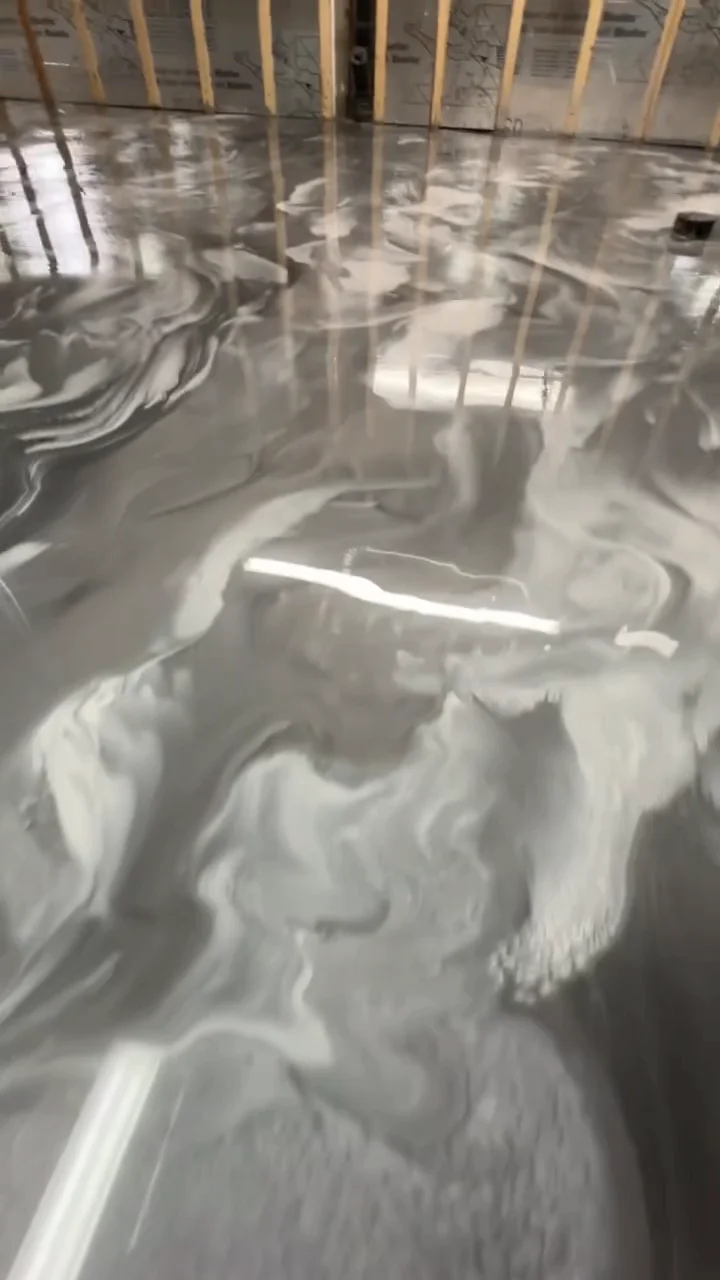
Choosing the colours for your polyaspartic floor coating depends mainly on how the space is used, the lighting available, and the type of dirt you want to hide. For a residential garage, a commercial space, or an industrial area in Quebec, a mottled or variegated shade often holds up better over time than a solid colour that's very light or very dark. A real-life sample remains the best decision-making tool before requesting any quote.
Why the Use of the Space Determines the Colour
A floor doesn't experience the same wear and tear depending on whether it deals with tires, carts, chemical products, or simply foot traffic. Before choosing a shade, you first need to answer a simple question: what will this floor be exposed to on a daily basis? For floors facing forklifts, chemicals, and constant heavy traffic, a solid-colour system built specifically for these demanding conditions deserves a closer look at our industrial flooring solutions.
- Residential garage: medium tones with a speckled or flake effect hide dust, salt deposits, and tire residue better than a flat, solid colour.
- Commercial space: the colour often needs to match the brand image, the walls, and the lighting of the location, while remaining practical for daily upkeep.
- Industrial or post-disaster sector: priority is usually given to making traffic zones easy to see and spills easy to spot, which points toward bolder shades or systems with built-in markings.
These are practical decision-making criteria, not the results of comparative testing. The right choice always depends on the specific space you want to cover.
How Lighting Affects Colour Perception
A colour never looks the same under the fluorescent lighting of a basement, the natural light of a storefront, or the industrial lighting of a warehouse. Before settling on a choice, it's best to ask to see a real sample of the proposed system, either on site or under lighting conditions similar to those of your space.
Digital photos or marketing images give a useful preview but are rarely accurate. The sheen of the finish (satin, semi-gloss, or gloss) also affects how a given shade is perceived, since a glossier finish accentuates reflections and can make a colour appear lighter than it actually is.
The Polyaspartic Systems Available and Their Visual Result
Colour choice isn't limited to a solid shade. ERA Époxy offers a high-durability polyaspartic coating available in several styles, including metallic, flake, quartz, and solid colour systems, suited to garages, commercial spaces, warehouses, and basements.
- Solid colour: a clean, uniform effect, often chosen by businesses wanting a sleek image.
- Flake: a textured effect that effectively hides small imperfections and dust in a heavily used garage.
- Quartz: a more structured look, popular in high-traffic commercial or industrial spaces.
- Metallic: a striking visual effect, often sought after for a high-end finish in a showcased residential space.
Each system has its own limits in terms of colour and sheen availability. It's best to check which shades are actually offered in the system you're considering before getting attached to a specific image.
Colour Stability Over Time
Polyaspartic chemistry is generally recognized for good UV resistance compared to some older coatings, which limits yellowing over time. That said, the actual stability of a colour depends on the specific formulation used, exposure to direct light, and the maintenance performed. There's no universal figure that guarantees a particular colour will stay exactly the same forever, regardless of the manufacturer.
To limit changes in appearance:
- avoid prolonged exposure to unfiltered direct light over long periods;
- sweep regularly to prevent abrasive particles from dulling the surface;
- clean up spills quickly, especially chemical products or de-icing salt.
Common Mistakes to Avoid When Choosing a Colour
1. Choosing based on a digital image alone, without ever seeing a physical sample under real lighting. 2. Opting for a very light colour in a garage with heavy tire traffic, which makes every mark stand out. 3. Overlooking the sheen, assuming only the shade matters, when the finish actually changes the entire perception of the colour. 4. Ignoring the condition of the substrate: a poorly prepared surface can affect the uniformity of the final result, no matter the colour chosen. 5. Confusing aesthetics with durability: an attractive colour doesn't replace proper surface preparation or a system suited to the actual use of the space.
What to Do Before Requesting a Quote
The price of a polyaspartic coating varies depending on the condition of the surface, the area to be covered, the system chosen (solid colour, flake, quartz, or metallic), and the level of preparation required. To get a recommendation tailored to your space, it's best to share photos of the area, indicate the intended use, and ask to see a real sample before requesting a quote. You can also check the service areas to confirm availability in your region of Quebec, or browse the blog for other practical guides on floor maintenance and preparation.
Related reading: