


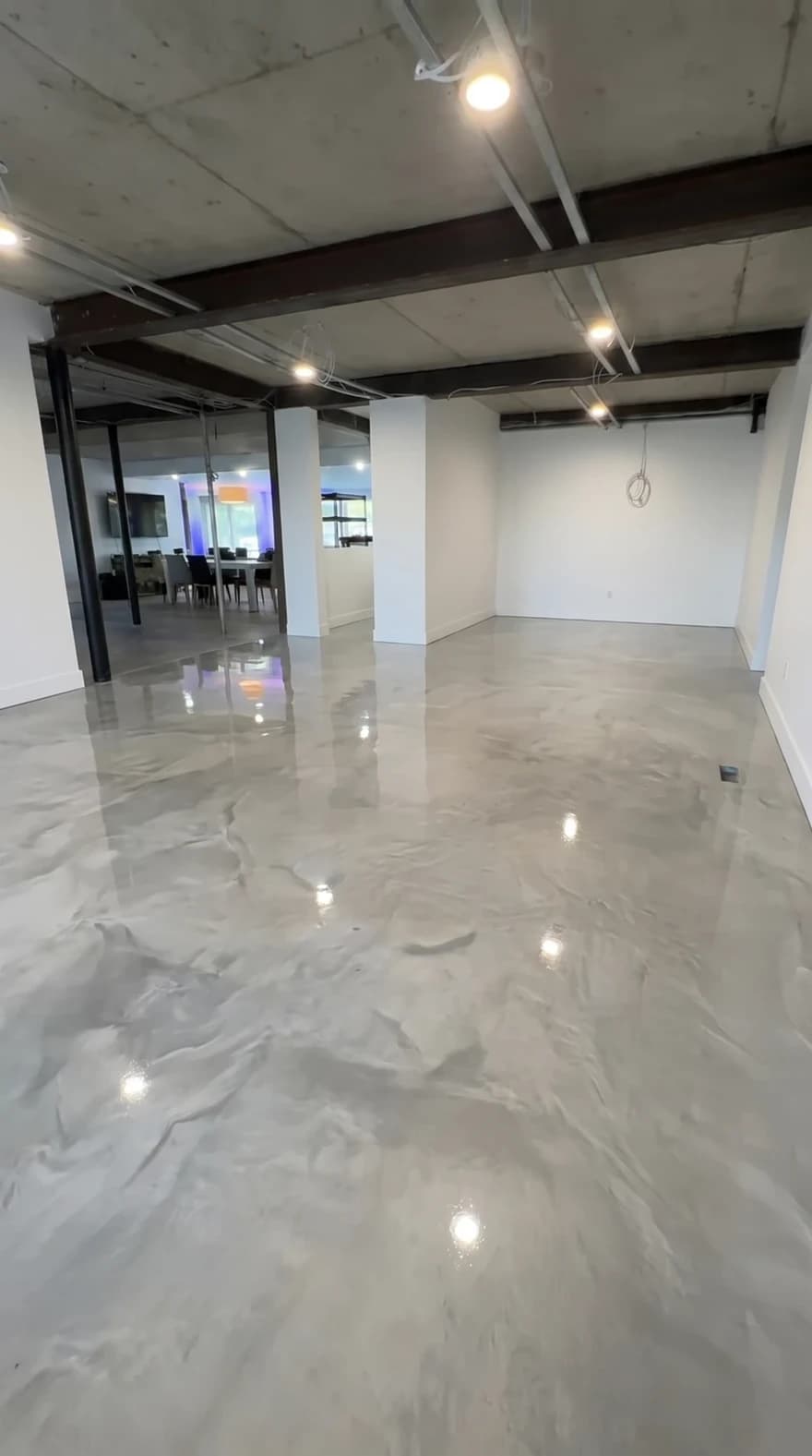
Industrial flooring in Montreal's Garment District needs to hold up to steady traffic, heavy goods handling, and frequent cleaning, all typical in the multi-tenant buildings found throughout the textile sector. A properly prepared epoxy or polyaspartic coating provides the durability, cleanliness, and resistance this type of commercial and industrial space requires.
Montreal's Textile District: A Demanding Sector for Flooring
The Garment District, historically centred around the Chabanel area, brings together sewing workshops, warehouses, showrooms, and distribution spaces housed in industrial buildings that are often shared among several tenants. This kind of building sees heavy, ongoing use: carts, pallets, mobile racks, and a constant flow of staff and goods.
According to recent data on Montreal's industrial rental market, flex spaces in the region can range from a few thousand square feet to more than 28,000 square feet, which shows just how much the surfaces needing protection can vary from one unit to another in this kind of sector. A floor that holds up in a small workshop also needs to perform in a large warehouse, which calls for a coating system built around how the space is actually used rather than a one-size-fits-all solution.
The Challenges of Industrial Flooring in a Multi-Tenant Building
In a shared textile building, every tenant has different needs: some store rolls of fabric, others run sewing workshops or offices attached to a production area. The floor has to handle several realities at once:
- Resistance to abrasion caused by carts and repeated foot traffic
- Tolerance to stains, moisture, and sometimes chemicals used in workshop settings
- Easy cleaning to keep the space looking professional and tidy
- Fast installation to limit disruption to tenants' operations
Industrial spaces of this kind also carry different operating expenses (OPEX) from one lease to another, which is a good reminder of why it's worth choosing a floor that cuts down on maintenance costs over the years rather than one that needs replacing too often.
Epoxy or Polyaspartic: Which Coating Suits This Type of Space
The choice between an epoxy system and a polyaspartic system mostly comes down to how the space is used and how much time is available for installation.
Epoxy works well on surfaces that carry a constant heavy load, such as storage areas or cart traffic lanes. It provides a solid base with strong long-term resistance.
Polyaspartic cures much faster, which often means getting a space back in service sooner. That's a real advantage in an occupied building where several tenants can't afford a long shutdown.
In many cases, combining both systems gives you the durability you need along with a reasonable turnaround time. The best way to figure out which system fits your space is to have the current condition of the floor and its day-to-day use assessed.
What Affects the Price of an Industrial Floor
There's no single price for industrial flooring, since several factors directly affect the final cost:
- The condition of the existing concrete (cracks, moisture, old coatings that need removing)
- The total area to be treated
- The finish chosen based on how the space will be used
- The amount of prep work needed before application (grinding, repairs, primer)
- How accessible the building is, an important factor in the multi-storey buildings common in the textile sector
Since every project is different, the best approach is to have your space assessed directly. You can request a quote for your industrial floor.
Related reading: