


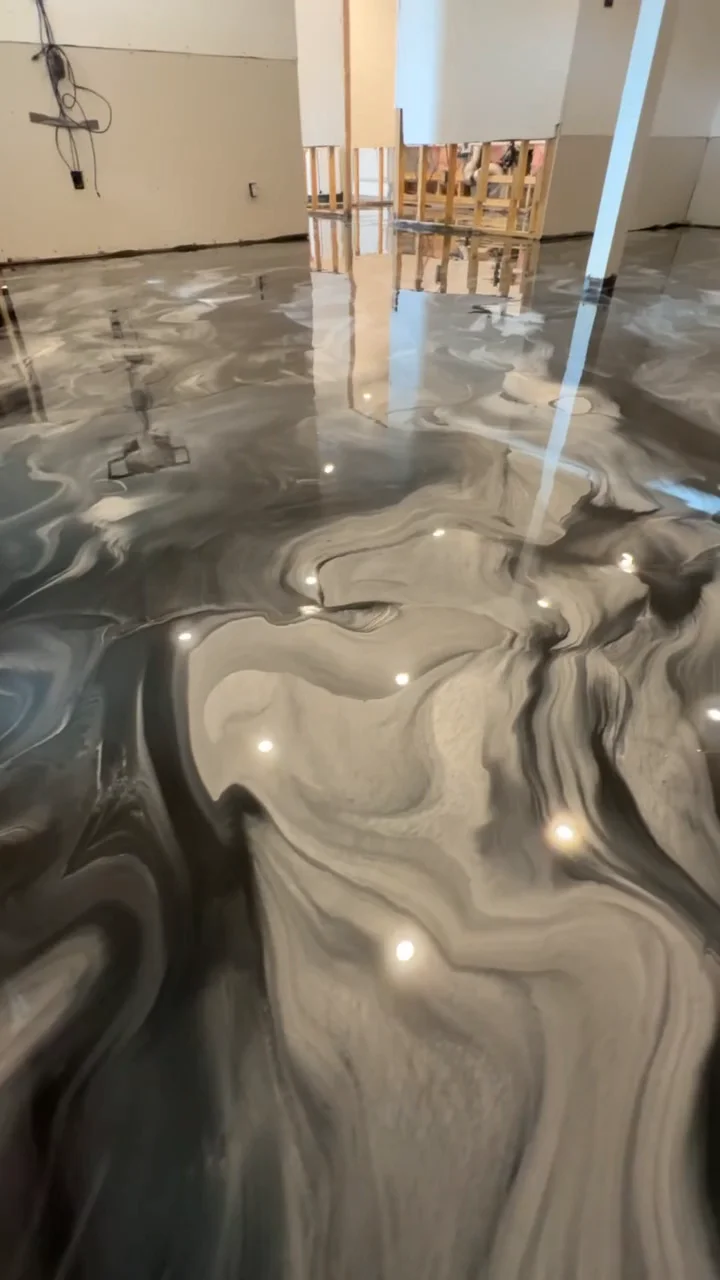
Commercial epoxy flooring in Montreal's Garment District has to stand up to constant foot traffic, cart wear, and the visual standards of a busy textile sector. ERA Époxy offers metallic, flake, quartz, and solid colour systems suited to shops, warehouses, and high-traffic spaces.
Why the Garment District comes with unique challenges
The Garment District brings together textile production workshops, showrooms, distribution warehouses, and retail spaces where people are constantly coming and going. These premises often combine several uses under one roof: receiving goods, cutting or assembly areas, client-facing showroom space. A floor that needs to double as an industrial work surface and an attractive showpiece has very different requirements than a simple residential garage floor.
The repeated passage of carts, pallets, or rolling bins wears down a standard coating fast. Bare concrete or a lower-grade epoxy paint quickly starts chipping, collecting dust, and staining in ways that are hard to remove, especially in an environment where fabric fibres, dyes, or sewing machine oil are part of daily life.
Finishing systems built for commercial spaces
ERA Époxy offers several systems designed for distinct needs:
- Metallic: a high-end visual effect for retail spaces or showrooms that want to stand out.
- Flake: adds texture and naturally hides dust, useful in production or storage areas.
- Quartz: a durable surface with a slip-resistant finish, ideal for zones prone to spills.
- Solid colour: a clean, low-maintenance option for administrative areas or traffic corridors.
These systems work just as well in garages, commercial spaces, and warehouses as they do in basements, covering most of the layouts found in a commercial building in the Garment District. Choosing the right system comes down to how each area is actually used, not just the look you're going for.
What affects the price of a commercial project
No two commercial epoxy flooring jobs are priced the same. Several factors influence the final cost and scope of the work:
- The current state of the concrete: cracks, old paint layers, or oil stains all require more thorough prep work.
- The total surface area: a large warehouse doesn't have the same logistical needs as a small showroom.
- The finishing system chosen: metallic, flake, quartz, and solid colour each involve a different number of coats and application time.
- Operational constraints: a business that can't close for long needs a different plan than a warehouse shut down for renovations.
Rather than guessing at a price without seeing the space, the best approach is to request a quote that takes into account the actual condition of your floor and your goals.
Upkeep and long-term durability
A well-installed commercial epoxy floor needs simple but regular upkeep. Frequent sweeping or vacuuming keeps dust and textile residue from building up, which is especially important in a sector like the Garment District where thread, fabric scraps, and cutting dust travel easily through the air.
Spills, whether machine oil or cleaning products, should be wiped up quickly so the liquid doesn't seep into joints or unprotected areas. Wire brushes or abrasive pads aren't recommended, as they can damage the surface over time. A gentle clean with a mop and a neutral cleaner is usually enough to keep the coating looking good and performing well.
How a quote request works
Before recommending a system, we need to assess the condition of the substrate, the surface area to cover, and how each zone will be used. ERA Époxy's website features before-and-after transformation examples along with installation videos, giving you a real sense of what's possible depending on the system chosen. These examples don't replace an on-site assessment, but they help you picture your options before requesting a quote tailored to your business.
Common mistakes to avoid
- Choosing based on looks alone, without considering how much real traffic the space gets.
- Underestimating concrete prep, which can compromise the coating's adhesion and durability.
- Overlooking slip resistance needs in areas exposed to moisture or liquids.
- Scheduling installation without accounting for operating hours, which can needlessly extend a temporary closure.
A well-planned commercial epoxy floor in the Garment District combines durability, easy upkeep, and a polished look, three things that matter just as much in a production space as in a showroom open to clients.
Related reading: