


Epoxy flooring in the West Island suits garages, basements, businesses and industrial spaces that need a clean, durable, low-maintenance surface. ERA Époxy offers metallic, flake, quartz and solid colour systems, adapted for residential, commercial and post-disaster projects. A personalized quote helps you choose the right finish based on how the space is actually used.
Why Consider Epoxy Flooring for Your Property
A bare concrete garage floor stains, chips and becomes harder to clean as the years go by. Epoxy flooring creates a seamless surface that stands up to daily wear and is easy to maintain with just a broom or a mop. In West Island homes, this solution is often chosen for garages, finished basements and interior driveways.
On the commercial side, property managers look for a finish that projects a professional image while holding up to constant foot traffic, customers or equipment. ERA Époxy offers applications for garages, commercial spaces, warehouses and basements, which covers a good portion of the needs seen throughout the region.
Residential, Commercial or Industrial: Which System Should You Choose
The right system depends on the intended use and the level of traffic.
- Metallic: a distinctive visual effect, often sought after for a high-end residential garage or a commercial space that wants to stand out.
- Flake: a texture that hides dust and small imperfections well, popular in garages and certain commercial spaces.
- Quartz: a durable option, often chosen where strength and slip resistance are the priority.
- Solid colour: a clean, understated finish suited to basements, warehouses and spaces where simplicity is the goal.
A good starting point is to describe how the space is actually used, whether it's a family garage, a busy shop or a warehouse, so the choice can be steered toward the most relevant system. That's exactly what a quote request helps clarify with a professional.
The Steps of a Properly Done Installation
A well-installed epoxy floor starts with proper surface preparation. Concrete that hasn't been properly prepped, that's still porous or contaminated with oil, will compromise adhesion no matter how good the chosen system is. The general steps typically include assessing the condition of the concrete, mechanically preparing the surface, applying the base and finish coats, then allowing the necessary curing time before the space is fully back in service.
In a post-disaster context, this preparation step matters even more, since the concrete has often been affected by moisture, damage or contamination that needs to be corrected before any application. An on-site assessment remains the most reliable way to know exactly what the surface requires.
What Affects the Price of an Epoxy Floor
There's no universal price for an epoxy floor, since several concrete factors influence the final cost:
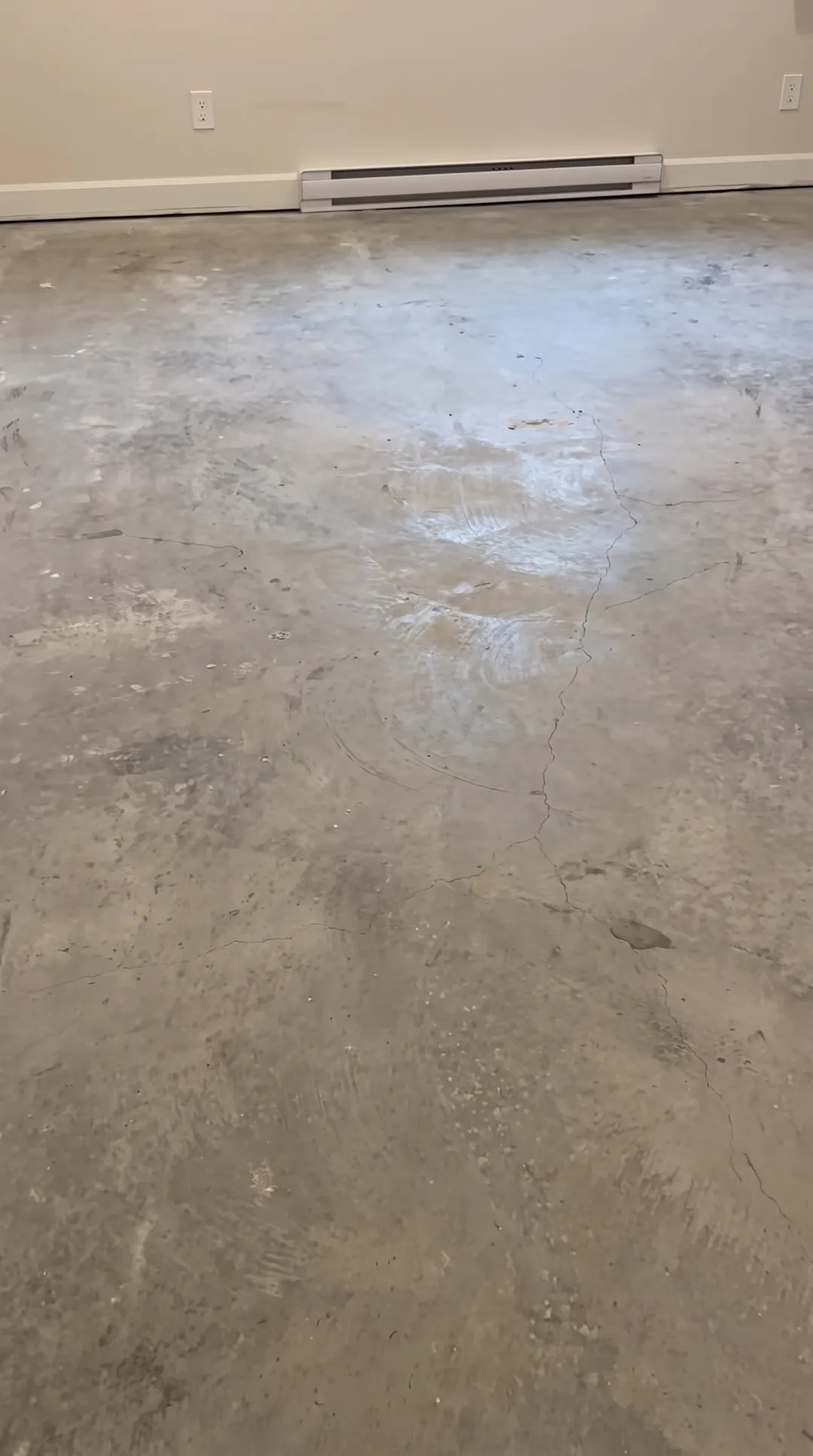
- The current condition of the concrete: cracks, residual moisture or contamination require more extensive prep work.
- The total surface area to be covered.
- The system chosen, since a metallic finish generally involves more steps than a solid colour.
- The level of prep required, including sanding or repairing the substrate.
- Site conditions, such as access, ventilation or downtime constraints for a business.
Rather than estimating an amount without seeing the space, the most accurate way to get a real number remains to request a quote after an assessment of the surface in question.
Maintenance and Useful Life
An epoxy floor requires simple but regular upkeep. Frequent sweeping to remove sand and gravel, along with occasional washing with a mild product, helps preserve the finish's appearance and performance over time. Avoiding dragging heavy objects or metal tools directly across the surface also helps limit marks.
The useful life of an epoxy floor largely depends on the quality of the initial preparation, the system chosen and the day-to-day use of the space. A residential garage with moderate traffic and basic upkeep can expect to keep an attractive finish longer than a high-traffic commercial space without regular maintenance.
FAQ
Related reading: