


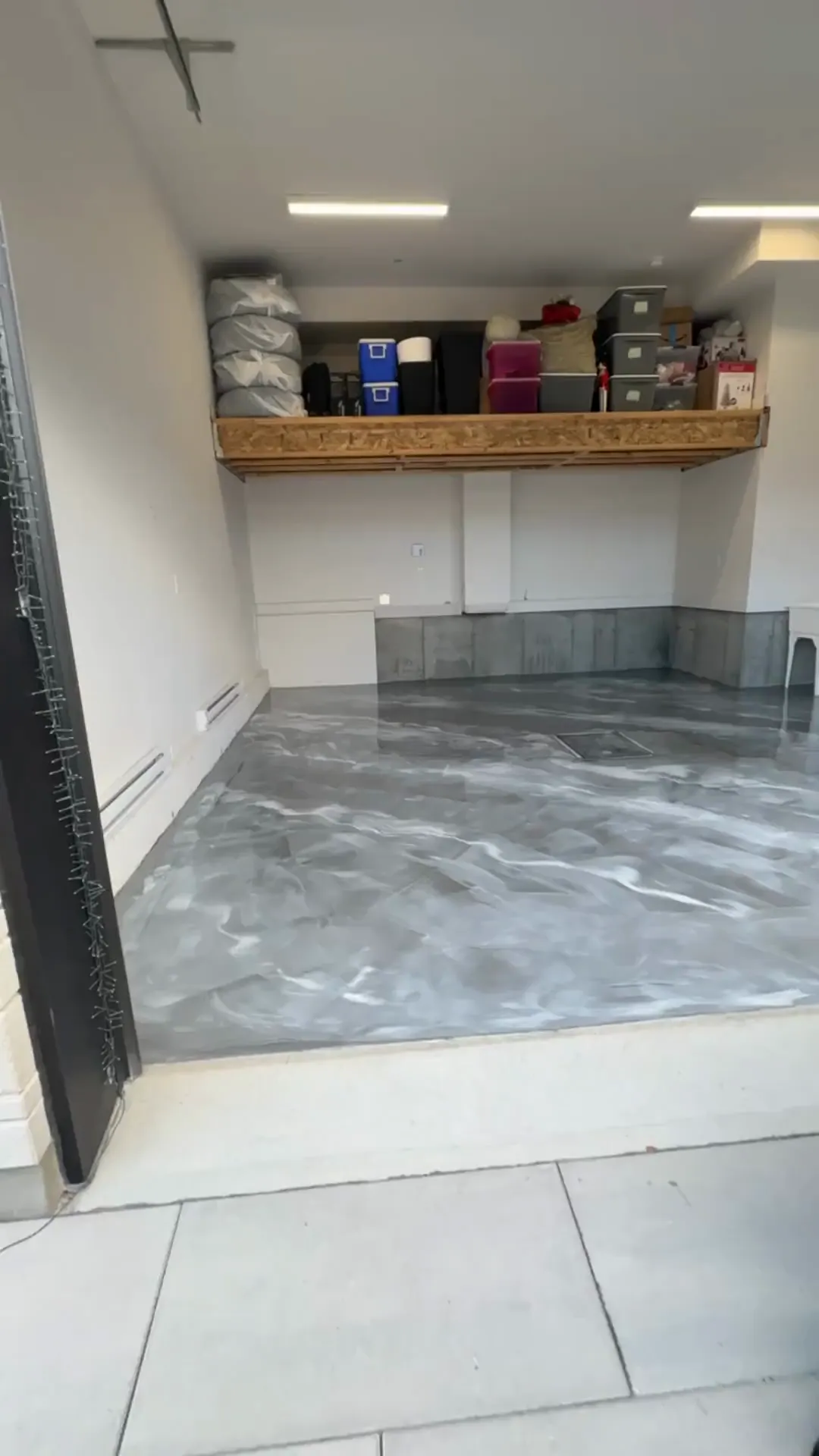
An epoxy garage floor in Montreal is priced by the square foot, and what drives that price is the prep the concrete needs, the number of coats, and the decorative options you choose. This coating gives you a surface that resists oil, road salt, and impacts, all while leaving your residential or commercial garage with a clean, long-lasting finish.
How much does an epoxy garage floor cost in Montreal
Epoxy floor cost depends on several concrete factors, not just square footage. Here is what drives the price of an epoxy garage floor:
- The condition of the existing concrete (cracks, moisture, repairs needed)
- The number of coats applied (base, body, topcoat)
- The type of system: standard epoxy, flake epoxy, or polyaspartic
- The total area and how accessible the garage is
- Add-ons like an anti-slip finish or sealed joints
The price is set per square foot, but square footage alone tells you very little: the condition of the concrete and the system you choose are what really move the number. A residential garage with a sound slab, no cracks and no moisture, needs far less preparation than the same garage with a damaged slab or an old coat of paint on it. Commercial or industrial projects, with higher chemical-resistance requirements, call for thicker systems and sit above a standard residential job. To get an accurate figure for your space, request a free quote that accounts for the real condition of your floor.
The steps of a professional installation
A well-done epoxy garage floor rests on thorough preparation, far more than on the product itself.
Concrete preparation
The concrete has to be ground or shot blasted to open the pores and allow the best possible adhesion. Cracks are repaired and residual moisture is checked, because a poorly prepared surface undermines the durability of the coating, no matter how good the epoxy.
Applying the coats
A base coat soaks into the concrete to create a strong bond. One or two body coats add thickness and strength, followed by a topcoat that protects against wear, UV rays, and stains.
Drying and curing
Drying time varies with the system chosen. Traditional epoxy often needs several days before full use, while polyaspartic generally allows a faster return to service, an advantage for businesses that cannot close for long.
Epoxy garage floor or polyaspartic: which to choose
An epoxy garage floor remains a proven option, offering solid chemical resistance at an affordable price. Polyaspartic, the newer option, cures faster, holds up better against UV rays, and suits garages with large doors exposed to the sun. The choice comes down to your budget, your timeline, and how the floor will be used.
Basement epoxy floor: what to know
A basement epoxy floor calls for extra attention to moisture. Unlike a garage, a basement is often less ventilated and more prone to moisture rising through the concrete. A moisture test before application is recommended, and some moisture-tolerant epoxy products are the better fit for this kind of project.
Pros and cons of an epoxy garage floor
An epoxy garage floor brings several concrete benefits:
- Resistance to oil, salt, and common chemical stains
- Simple upkeep, often just a sweep or a rinse with water
- A customizable look, solid colour or with decorative flakes
- A durable surface that protects the concrete underneath
That said, this coating comes with a few limits worth weighing before you commit, especially for heavily used surfaces.
How to choose your contractor
A successful epoxy garage floor depends largely on the installer's expertise. Check the following before confirming a project:
- Does the company actually inspect the concrete before quoting
- Are the products suited to Quebec's climate and its freeze-thaw cycles
- Does the warranty cover peeling or flaking
- Does the quote spell out the number of coats and the type of system
For a residential, commercial, or post-disaster project, request a detailed quote that includes a real inspection of your surface before any commitment.
Related reading: