


Institutional epoxy flooring in Longueuil needs to withstand steady traffic, frequent washing, and cleaning products, all while staying easy to maintain day to day. ERA Époxy designs multi-layer systems suited to schools, clinics, administrative offices and shops, as well as residential garage epoxy flooring for homeowners in the Longueuil area.
Why epoxy flooring works well for institutional buildings
A public facility or a business sees a volume of foot traffic every day that traditional flooring struggles to hold up against over time. Tile cracks, untreated concrete crumbles and traps dust, and some soft coatings peel at the seams. A properly applied epoxy system creates a continuous, seamless surface that limits dirt buildup and makes cleaning easier.
ERA Époxy offers several types of finishes depending on the intended use: metallic systems for a distinctive visual effect, flake systems for a textured, understated look, quartz for added durability, and solid colour for a clean, uniform finish. These same product families apply just as well to a commercial space as to a residential garage floor, which means consistent quality across institutional and residential projects carried out in Longueuil.
Practical criteria to evaluate before choosing a contractor
Choosing a flooring system for an institutional environment isn't just about looks. Here are the factors that should guide your decision:
- Traffic resistance: number of daily passes, presence of carts, rolling equipment or heavy furniture.
- Cleaning requirements: how often the space is washed, the type of disinfectant products used on site.
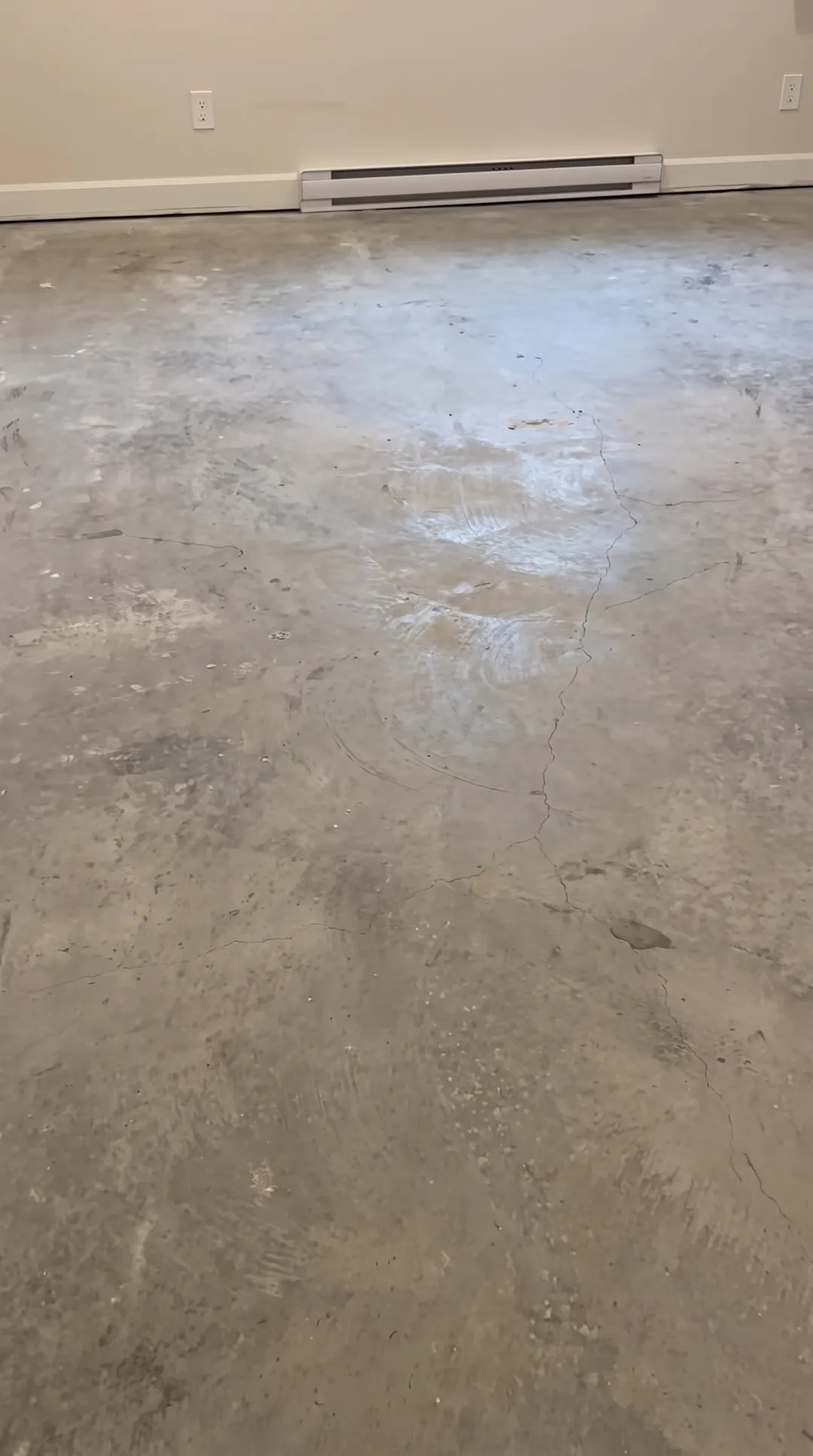
- Current condition of the surface: existing cracks, residual moisture in the slab, old coatings that need to be removed.
- Scheduling constraints: whether the space can be closed off during application or work needs to happen section by section.
- Future use: any planned change in purpose, added equipment, wet zones or dry zones.
These criteria directly influence the type of system recommended and the sequence of work. An industrial facility manager won't have the same priorities as a homeowner looking for a residential garage floor, but the underlying prep logic stays the same.
Preparation and application steps
A well-executed institutional floor always starts with an assessment of the slab. Cracks need to be repaired before any application, and depending on the layout, elements such as sanitary coving may be required to meet certain facilities' hygiene standards. Once the surface is ready, a multi-layer system is applied based on the intended use: a base coat for adhesion, a mid-layer for strength, and a finish coat for appearance and wear protection.
This step-by-step approach explains why two projects that look similar on the surface can end up needing very different quotes. Preparation, more than the final product itself, is often what determines how long the flooring lasts.
Day-to-day maintenance and durability
One of the main benefits sought in institutional settings is how easy the flooring is to maintain. A damp mop with a neutral cleaner is generally enough for daily upkeep, no abrasive products needed. This ease of maintenance cuts down on cleaning time in schools, clinics and administrative offices, while keeping the floor looking good.
Resistance to disinfectant products is also an important factor in settings with strict hygiene protocols. A well-chosen system holds up to frequent cleaning without dulling or peeling at the seams, which is what really sets a properly applied epoxy floor apart from a standard coating.
What affects the price of an institutional floor
There's no universal price tag for an epoxy flooring project, whether institutional or residential. Several factors affect the final cost:
- the total surface area to cover;
- the condition of the existing slab and how much prep work is needed;
- the type of finish chosen (metallic, flake, quartz or solid colour);
- any special constraints such as sanitary coving or a tight closure schedule;
- site accessibility and on-site logistics.
Since every institutional project has its own particularities, the best way to get a realistic number is still to request a quote after an on-site assessment. To compare finish options and better understand the differences between available systems, you can also check out other articles on the ERA Époxy blog.
FAQ
Related reading: