


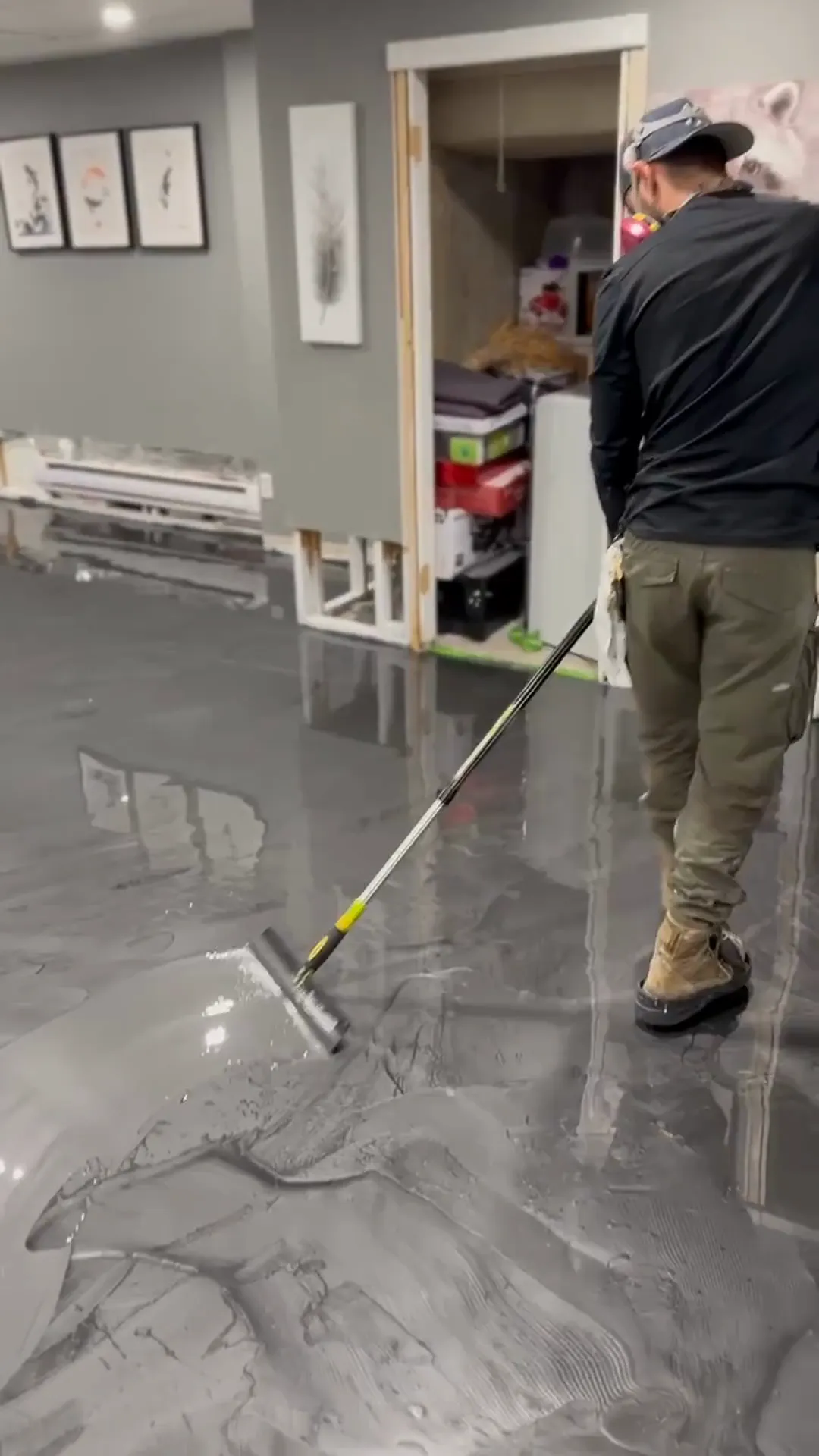
Industrial flooring in Montreal needs to stand up to heavy machinery, chemicals and constant traffic while staying safe and easy to maintain. The system you choose (epoxy or polyaspartic) depends on the use, the condition of the concrete and the level of traffic. ERA Époxy assesses your space and proposes a solution tailored to your needs with a personalized quote.
Why the right coating matters for an industrial space
An industrial floor is never just a decorative element. It takes the impact of forklifts, exposure to oils, solvents and moisture, plus repeated cleaning cycles. A poorly chosen coating wears out prematurely, cracks or becomes slippery, which creates risks for staff and avoidable repair costs.
Market reports on floor coatings confirm that renovating existing facilities makes up a significant share of demand, just as much as new construction. In practical terms, this means modernizing a shop, warehouse or commercial garage floor without rebuilding the entire building is a common and well-established approach.
The criteria that determine the right coating
Choosing an industrial flooring system comes down to several concrete factors specific to your operation:
- The type of traffic: foot traffic only, forklifts, heavy machinery or vehicles
- Chemical exposure: oils, grease, solvents, industrial cleaning products
- Humidity and temperature swings in the space
- Cleaning frequency and methods used (pressure washing, abrasive products)
- The current state of the concrete: cracks, residual moisture, old coating to remove
Each of these elements affects the thickness of the system, the type of resin and the surface prep needed before application. An on-site assessment confirms these needs before any quote is prepared.
Anti-slip safety: a non-negotiable criterion
In an industrial setting, anti-slip safety is one of the essential selection criteria. A floor exposed to moisture, spilled liquids or frequent cleaning needs to offer a level of traction suited to the actual use of the space, particularly in high-risk traffic areas like entrances, ramps or wash bays.
ERA Époxy factors this into the choice of finish, adjusting the texture and sheen based on the type of activity and the risk zones identified during the assessment.
Residential, commercial and industrial: different needs
While the basic principle is similar, requirements vary depending on the context:
- Residential garage: resistance to oil stains, road salt and tires, while keeping an attractive finish
- Commercial space: durability, easy maintenance and a professional look for a space visited by customers
- Industrial facility: chemical resistance, heavy loads and durability under intensive traffic
This distinction matters when defining your needs, since the same system won't necessarily be applied the same way in a residential garage as in a warehouse with heavy traffic.
Post-disaster restoration: bringing a floor back to like-new condition
Water damage, fire or contamination can seriously damage an industrial or commercial floor. In these situations, the coating needs to do more than look good, it has to sanitize the surface and provide a solid foundation to start fresh. ERA Époxy supports facility managers through this type of restoration, taking into account the timelines that come with post-disaster projects.
What affects the price of industrial flooring
There's no universal rate for industrial flooring, since several factors influence the final cost:
- The condition of the existing surface and the prep work required (sanding, crack repair, decontamination)
- The total area to be covered
- The type of finish chosen (epoxy, polyaspartic, thickness, anti-slip texture)
- Access constraints and the desired turnaround time
The best way to get a fair price tailored to your space is to request a quote, which includes an assessment of your actual needs, either on-site or based on your plans.
How the quote process works
The process starts with a description of your space: type of use, approximate area and the current condition of the floor. A visit or remote assessment then confirms the recommendations and helps prepare a clear proposal, including the recommended system and the prep steps needed.
Related reading: