


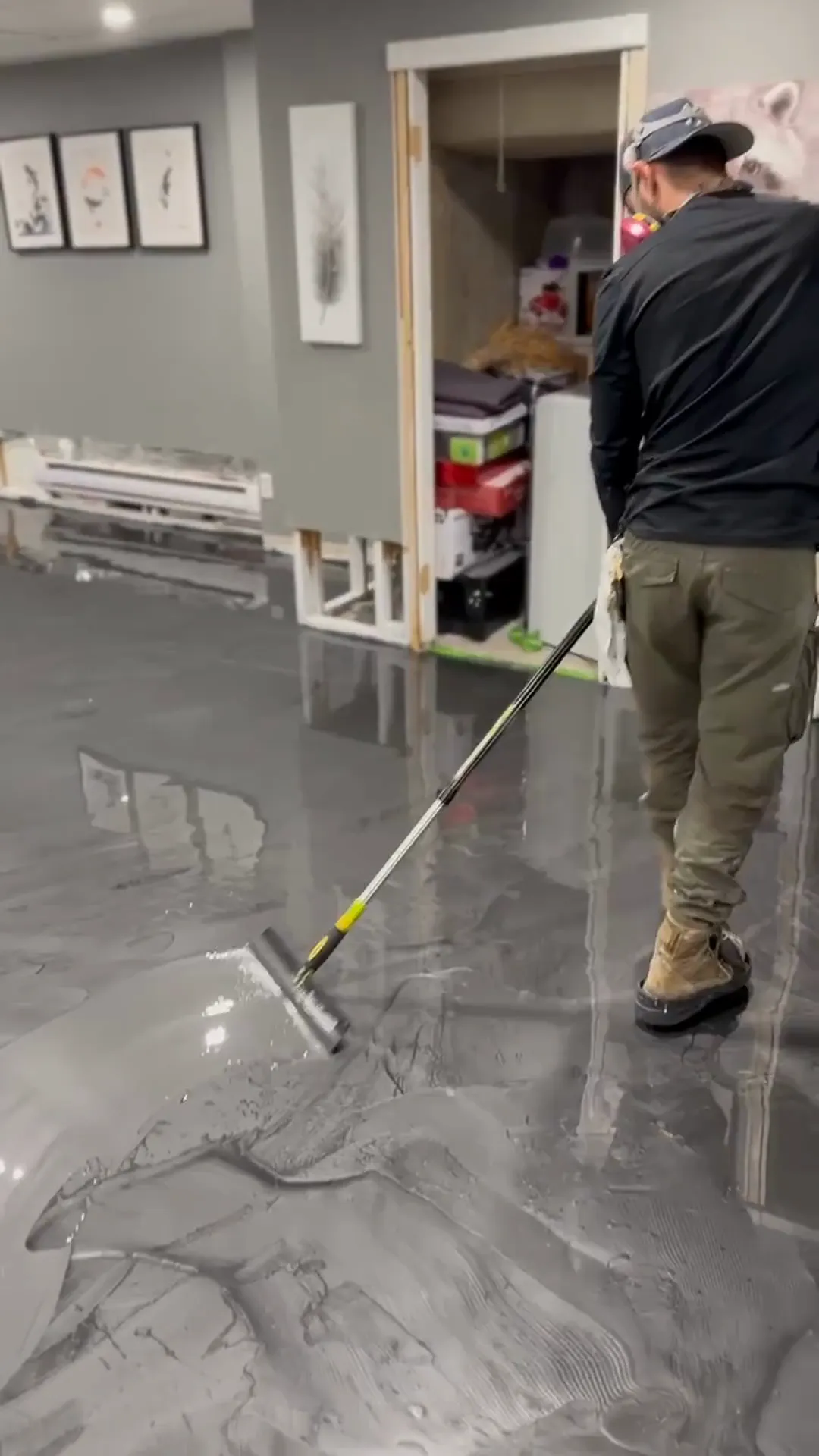
Installing an epoxy floor means preparing the concrete, correcting moisture issues and applying a multi-layer system suited to the use, residential, commercial or industrial. ERA Époxy offers metallic, flake, quartz and solid-colour finishes for garages, businesses, warehouses and basements. A professional evaluation remains essential before requesting a quote.
The key steps to a successful epoxy floor
A successful epoxy floor relies on a precise sequence, and the order of operations matters just as much as the materials chosen:
- Inspection of the existing concrete: cracks, spalling, presence of old oil stains or sealant.
- Residual moisture testing of the slab, particularly important in Quebec where temperature swings are significant.
- Mechanical preparation of the surface, generally by sanding or shot blasting, to create the right porosity for adhesion.
- Application of primer, intermediate and finish coats depending on the system chosen.
- Respecting cure times before putting the floor back into full service.
Skipping a step, especially the prep work, compromises the durability of even the best product. That's why an on-site evaluation is always preferable to a remote estimate.
Why concrete moisture changes everything
Ambient humidity and vapour migrating up from the slab are among the most common causes of coating failure. Concrete, even when it looks dry, remains a porous material that can let moisture rise from the ground or from underneath the slab. High moisture levels at the time of application can prolong drying, hinder adhesion and, in some cases, cause the coating to peel prematurely.
In a climate like Quebec's, where seasonal humidity varies widely, this step should never be overlooked. A professional who assesses your surface before submitting a quote takes these conditions into account, which affects both the choice of system and the project timeline.
Choosing the right system: epoxy, polyaspartic and finish types
There are several families of coatings, and the right choice depends on the intended use, expected traffic and the desired look. ERA Époxy offers metallic, flake, quartz and solid-colour systems, each striking a different balance between appearance and durability.
- Metallic finish: a unique, deep look, often chosen for residential or commercial spaces with a decorative focus.
- Flakes: an appealing non-slip texture, popular in garages and basements.
- Quartz: a dense surface, often preferred for high-traffic environments.
- Solid colour: a clean, low-maintenance finish suited to many types of businesses.
Polyaspartic, often paired with or used alongside epoxy, stands out for its generally shorter cure times, an advantage worth considering when getting a commercial or industrial space back in service quickly is a priority.
Residential, commercial, industrial and post-disaster: different needs
A residential garage doesn't have the same requirements as an industrial warehouse or a high-traffic business. The applications offered by ERA Époxy cover garages, commercial spaces, warehouses and basements, reflecting the range of settings where an epoxy floor can be installed.
In a post-disaster context, the situation is different: the concrete may have been exposed to water, fire or harsh cleaning products, which makes assessing moisture and slab integrity even more critical before any application. This is a step where professional expertise makes a real difference, rather than attempting a quick fix.
For a specific project, whether it's a garage or a commercial space, it's more effective to request a quote that takes into account the actual condition of your surface.
How long before you can use the floor again
Cure times vary depending on the system chosen, the thickness of the coats and the ambient conditions. Cool or humid conditions can extend drying time, return-to-service time and full cure time, which is particularly relevant during colder or damper seasons in Quebec.
A coating's resistance to abrasion and chemicals generally reaches its maximum once the cure is complete, not right after application. Respecting these timelines, even if they seem inconvenient for a business eager to reopen, protects the long-term investment.
Is this a DIY project or one for a professional
This is one of the most common questions among homeowners considering installing an epoxy floor themselves. The answer mostly comes down to risk tolerance, since preparation or mixing errors are difficult to fix once the product has been applied.
- Incorrect or missing moisture diagnosis.
- Insufficient mechanical preparation of the surface.
- Application under unsuitable ambient conditions.
- Choosing a system that doesn't match the actual traffic in the space.
These mistakes are common and costly to redo. For a durable, attractive result, especially in a commercial or industrial setting, it's recommended to request a quote before starting the work.
FAQ
Related reading: