


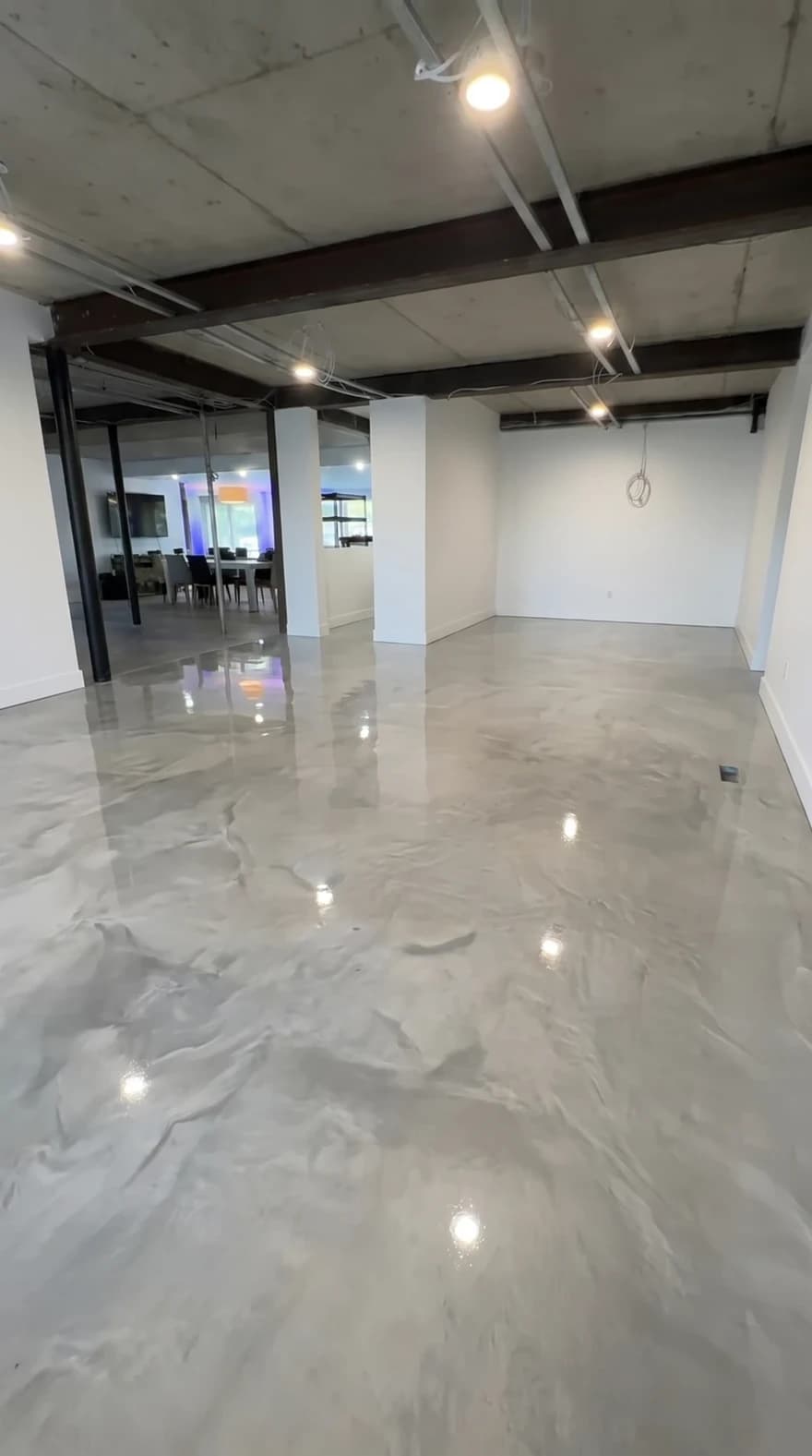
Industrial epoxy flooring is a multi-layer resin coating designed to withstand heavy traffic, impacts, chemicals, and the constant wear of plants and warehouses. At ERA Époxy, every installation is tailored to the actual condition of the concrete and the use of the site, for a durable, clean, and high-end result.
Why choose industrial epoxy flooring
A bare concrete floor wears out quickly in an industrial environment. It chips, absorbs oil and chemicals, and becomes harder to clean over time. Industrial epoxy flooring creates a continuous, seamless surface that solves these problems while giving the facility a professional look.
The main benefits plant and warehouse managers in Quebec look for:
- Resistance to abrasion caused by forklifts and rolling traffic
- Easy-to-clean surface, with no pores where dust and bacteria can build up
- Chemical resistance to oils, solvents, and cleaning products
- Uniform finish that improves brightness and the overall look of the site
- Anti-slip options for areas at risk of slipping
Industrial settings that benefit from high-performance epoxy flooring
Industrial epoxy flooring works well in a wide range of environments that see intensive use: mechanical shops, production areas, loading docks, electrical rooms, and storage warehouses. These spaces need a surface that can handle the weight of equipment, repeated impacts, and frequent cleaning cycles.
This type of coating is also common in sectors where cleanliness is a strict requirement, such as food processing, pharmaceuticals, and transportation, where a porous or cracked floor represents a contamination or compliance risk. In these settings, a sealed, seamless floor makes daily maintenance easier while reducing the areas where dirt can accumulate.
What influences the price of industrial epoxy flooring
The price per square metre for a resin epoxy floor varies based on several factors specific to each site. There's no fixed rate that applies to every installation, since every industrial floor comes with its own set of challenges.
Factors that affect the cost:
- The current condition of the concrete (cracks, oil contamination, old coating to remove)
- The total area to cover
- The number of layers and the type of finish chosen (epoxy, polyaspartic, or hybrid system)
- Specific needs like anti-slip properties, enhanced chemical resistance, or floor markings
- Site accessibility and scheduling constraints to minimize downtime
To get an accurate cost for your building, an on-site evaluation is the best approach. You can request a quote for a precise picture based on the condition of your floor and your operational needs.
Lifespan and maintenance of industrial epoxy flooring
The lifespan of an epoxy floor depends directly on the quality of the concrete preparation, the system applied, and the intensity of daily traffic. A well-prepared and maintained floor keeps its appearance and protective properties for many years, while a rushed installation on a poorly prepared surface wears out prematurely.
To maximize the longevity of industrial epoxy flooring:
- Clean regularly with compatible products, avoiding harsh abrasive agents
- Avoid dragging heavy loads directly across the surface
- Repair any deep impact quickly to prevent moisture from getting under the coating
- Schedule periodic inspections in high-traffic areas
Polyaspartic or epoxy: which option suits your facility
The choice between an epoxy system and a polyaspartic system depends on how quickly you need the site back in operation and on the conditions of the site itself. Polyaspartic generally offers greater UV resistance and faster curing, which can be a good fit for sites where downtime needs to be limited. The ERA Époxy team evaluates each site to recommend the system best suited to your industrial reality.
Drawbacks to consider before installing an epoxy floor
No coating is perfect for every context, and it's normal to want to know the limitations before investing. Here are the points to keep in mind:
- Concrete preparation is an essential step, which requires the site to be shut down temporarily
- A poorly prepared surface reduces the adhesion and durability of the system
- Some very smooth finishes can become slippery without an anti-slip treatment
- Choosing the wrong system for the actual use of the site can shorten the floor's lifespan
These risks are largely avoided through a professional evaluation before installation. That's why it's recommended to request a quote with an on-site visit rather than relying on a generic estimate.
Related reading: