


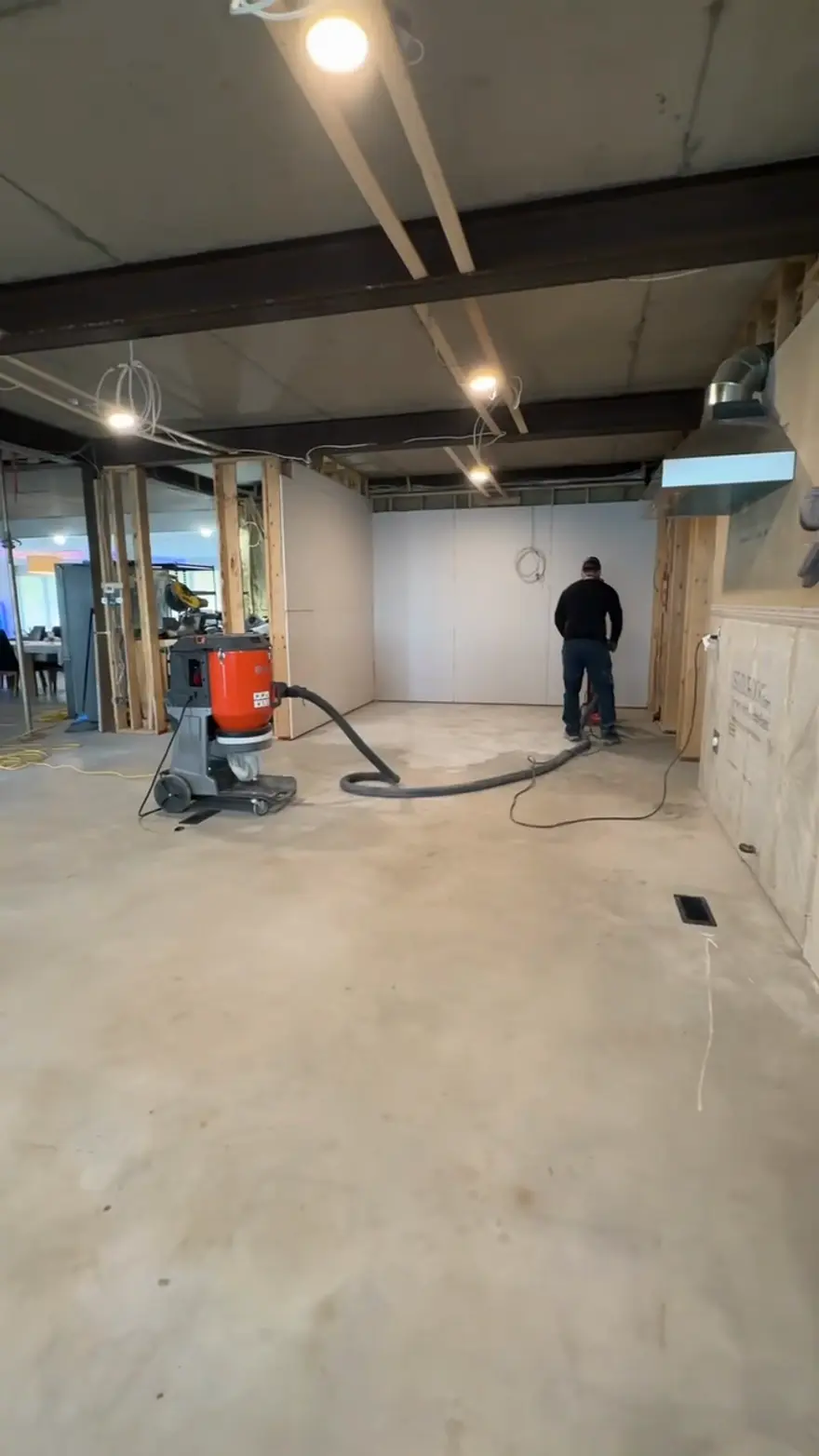
Industrial flooring for warehouses in Montreal's Chabanel district needs to withstand forklift traffic, heavy loads from the textile and logistics sectors, and repeated cleaning cycles. An epoxy or polyaspartic coating applied over a properly prepared slab delivers that kind of durability while keeping a clean, professional finish, well suited to the warehouses and commercial spaces found throughout the neighbourhood.
Why Chabanel has particular flooring requirements
The Chabanel district is home to industrial and commercial buildings tied to the textile, logistics and manufacturing trades, with warehouses that see daily traffic from forklifts, pallet jacks and rolling loads. This kind of activity puts constant wear on the floor: abrasion, impacts, and exposure to oils and mild chemicals. A floor that hasn't been properly prepared, or one left as bare concrete, won't hold up over time, which leads to cracking, dusting and worn-out areas near the main traffic lanes.
For a facility manager or business owner, this isn't just a cosmetic issue. A deteriorating floor slows down operations, makes maintenance harder, and can even become a safety concern for employees.
The limits of bare concrete in an industrial setting
Untreated bare concrete doesn't always hold up well under heavy, sustained traffic. According to an industrial construction guide, a 5-tonne forklift requires a compressive strength that untreated bare concrete can't guarantee beyond 24 months under sustained traffic conditions. In practical terms, that means an active warehouse in Chabanel running daily traffic over bare concrete can start showing visible wear, porous spots and a degraded finish in under two years.
A properly layered coating system protects the slab and extends its useful life well beyond that threshold.
Looking at cost over 15 years, not just price per square foot
The total cost of an industrial floor should be assessed over roughly a 15-year period, factoring in the initial installation, ongoing maintenance and eventual replacement, rather than just the price per square foot at the time of purchase. A cheaper floor upfront that ends up needing frequent repairs or early replacement often costs more in the long run than a system that's properly prepared from the start.
The final price depends on several concrete factors: the current condition of the slab, the total warehouse area, the type of finish chosen, and the amount of surface prep required before application. That's why every project deserves an on-site assessment rather than a generic estimate. You can request a quote to get pricing tailored to your building's actual condition.
Epoxy and polyaspartic: two solutions built for warehouses
For warehouses and industrial spaces in the Chabanel district, ERA Époxy offers epoxy and polyaspartic systems designed for heavy traffic. This type of coating combines a highly durable surface with a clean, professional finish, which works well for spaces where both appearance and durability matter, whether it's a textile showroom, a distribution warehouse or a receiving area.
These systems create a seamless surface that's easy to clean and resistant to mild chemicals, abrasion and the repeated impact of forklift traffic. Polyaspartic stands out for its fast cure time, a real advantage in a warehouse setting where downtime needs to stay to a minimum.
Every application starts with thorough preparation of the existing slab: cleaning, sanding or shot blasting depending on the concrete's condition, and repairing cracks and damaged areas. This step is critical to how well the final system holds up, no matter which finish is chosen.
Planning the work around Quebec's climate
Quebec winters add another factor to consider for any industrial flooring project in a building that isn't evenly heated. Temperature conditions have a direct impact on the project timeline, particularly in large warehouses where heating can vary from one zone to another. It's best to plan the work with a realistic timeframe and discuss seasonality right from the initial assessment.
For a Chabanel warehouse that needs to stay operational for part of the year, good planning also makes it possible to schedule the work during slower periods, reducing the impact on day-to-day operations.
Choosing the right partner for your industrial floor
A well-executed industrial floor comes down to three things: an honest assessment of the slab's condition, a coating system matched to the site's actual traffic, and surface preparation done properly. ERA Époxy supports facility managers and property owners across Chabanel through every one of these steps, from the initial diagnosis to the final finish.
To find out which options are right for your warehouse or commercial space, you can submit a quote request and get a personalized assessment based on your floor's size, current condition and expected level of use.
Related reading: