
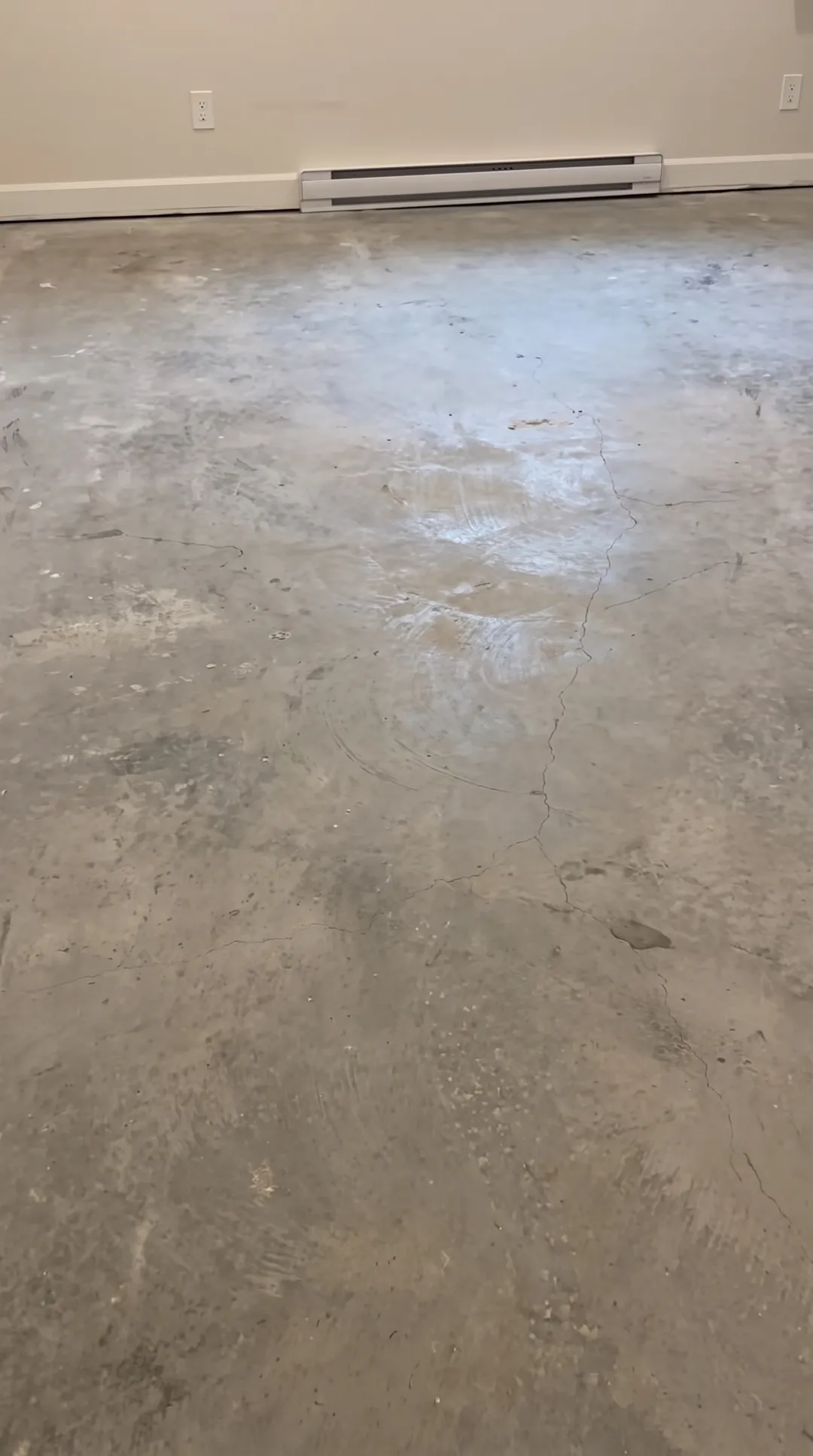
Crack repair and floor levelling before an epoxy finish in Montreal involves fixing cracks, chips and uneven spots in the concrete before applying a coating such as metallic epoxy. This step ensures the adhesion, durability and overall look of the final finish, no matter what type of space you're working with.
Why Proper Concrete Preparation Matters Before an Epoxy Floor
An epoxy floor can't hide the flaws in a concrete slab, it actually brings them out. An untreated crack will almost always resurface through the finish eventually, even under several coats. Levelling, on the other hand, prevents standing water, premature wear spots and drainage issues in a garage or commercial space.
Proper substrate preparation is what separates a long-lasting installation from a finish that starts breaking down within a few years. This is especially true for metallic epoxy systems, where the surface needs to be perfectly stable for the visual effects to spread evenly.
The Most Common Types of Cracks and Defects
Before any finish is applied, the concrete's condition is assessed to detect:
- Shrinkage cracks, often thin and surface-level, caused by the initial curing of the concrete.
- Structural cracks, deeper and sometimes caused by soil or foundation movement.
- Chips and spalling, common in garages exposed to salt and freeze-thaw cycles.
- Dips and uneven areas, which prevent a consistent coating thickness.
- Concrete dust or efflorescence, a sign of residual moisture that needs to be addressed before application.
Each type of defect calls for a different approach. An active structural crack can't be treated the same way as a stable shrinkage crack, and mixing up the two can jeopardize the entire project.
The Steps in Levelling and Repair Before the Finish
1. Slab inspection: identifying cracks, their depth and their likely cause. 2. Mechanical surface prep: grinding or shot blasting the concrete to remove debris, existing paint or contaminants that would hurt adhesion. 3. Crack and chip repair: filling with products suited to the floor's intended use. 4. Levelling: applying a mortar or self-levelling compound to even out the surface before the coating goes on. 5. Moisture check: confirming the slab is dry enough to receive the epoxy.
Skipping one of these steps to save time is one of the most common mistakes in the industry, and it's often the reason behind a finish that bubbles or peels prematurely.
What Affects the Price of Repair and Levelling Work
There's no fixed price that applies to every project, and any serious estimate requires an on-site assessment. Several factors influence the final cost:
- The overall condition of the concrete and the number of cracks or chips to repair.
- The total surface area to be prepped.
- The type of finish chosen: a metallic epoxy system often requires more meticulous prep than a solid colour finish.
- The amount of levelling needed, based on existing unevenness.
- Site accessibility, especially for commercial or industrial spaces.
To get an accurate picture tailored to your floor, the best approach is to request a quote after an inspection.
After a Disaster: An Even More Critical Step
In a post-disaster context, such as water damage or fire, the concrete can have damage that's invisible to the naked eye: hairline cracks, surface weakening or trapped moisture. Crack repair and floor levelling become even more critical in these cases, since they ensure the new finish sits on a solid, stable base without the risk of recurring issues.
Choosing the Right Finishing System Based on How the Space Is Used
Once the surface is prepped, the choice of finishing system depends on how the space is used: residential, commercial or industrial. The systems available include metallic, flake, quartz and solid colour finishes, each suited to different aesthetic and functional needs, whether it's for a garage, a commercial space, a warehouse or a basement.
To explore other aspects of preparation and floor finishing, check out our blog or see if your municipality is part of our service areas.
Related reading: